
Exterior house painting isn’t a one-size-fits-all timeline, especially in North Carolina where the climate plays a major role in how long your paint job lasts. The state’s unique combination of humidity, temperature swings, and intense UV exposure can accelerate paint deterioration faster than you might expect. Due to these factors, homeowners often find themselves repainting sooner than the national average suggests. This guide breaks down exactly how often you should repaint based on your siding material, what climate challenges to watch for, and the warning signs that indicate it’s time for a fresh coat.
How North Carolina’s Climate Affects Exterior Paint
North Carolina sits in a climate zone that creates a perfect storm for exterior paint deterioration. The combination of moisture, heat, and sunlight works against painted surfaces year-round, forcing homeowners to repaint more frequently than in drier or cooler regions.
Humidity and Moisture Challenges
The state receives approximately 43 inches of rainfall annually, spread relatively evenly throughout the year. This consistent moisture exposure means painted surfaces rarely get extended dry periods to recover. Humidity levels regularly exceed 70% during summer months, creating ideal breeding grounds for biological growth.
Mildew and algae thrive on painted exteriors under these conditions. North-facing walls suffer the most damage since they receive less direct sunlight and retain moisture longer after rain events. The constant dampness penetrates microscopic cracks in paint films, allowing spores to colonize beneath the surface. Once established, these organisms feed on paint binders and accelerate film breakdown.
Temperature Fluctuations Throughout the Year
Summer temperatures frequently surpass 90°F for extended periods. During these hot months, painted surfaces heat dramatically during daylight hours, then cool significantly overnight. This daily thermal cycling forces paint to expand and contract repeatedly.
The expansion-contraction process stresses paint films at the molecular level. Binders lose elasticity over time, and the constant movement creates microcracks that propagate into visible failure. Wood substrates amplify this problem since wood itself swells and shrinks with temperature changes, adding mechanical stress to the paint layer above.
UV Exposure and Sun Damage
South and west-facing walls receive intense afternoon sun exposure throughout the year. UV radiation breaks down paint polymers through a process called photodegradation. The chemical bonds in paint binders absorb UV energy and fracture, causing the film to lose cohesion.
Color pigments fade at different rates under UV assault. Darker colors absorb more heat, which accelerates both thermal cycling damage and UV breakdown. Red and yellow pigments typically fade faster than earth tones or whites. The combination of heat and UV on sun-exposed walls can reduce paint life by 30-40% compared to shaded surfaces.
Regional Variations Across NC
The state’s geography creates distinct microclimates that affect paint performance differently. Coastal areas face salt air and higher humidity levels, which increase corrosion on metal substrates and accelerate paint failure. The Piedmont region experiences the full range of temperature extremes, with hot summers and occasional freezing winters that compound thermal stress.
Mountain areas in western North Carolina deal with cooler temperatures but higher precipitation and more frequent freeze-thaw cycles. These cycles force moisture into paint cracks, where it freezes and expands, creating additional damage. Properties near large bodies of water experience elevated humidity and more consistent moisture exposure regardless of region.
Tree coverage also creates localized climate variations. Homes surrounded by mature landscaping stay cooler but retain moisture longer, promoting mildew growth. Properties in full sun experience maximum UV damage but benefit from faster drying after rain.
Recommended Repainting Schedule by Siding Material
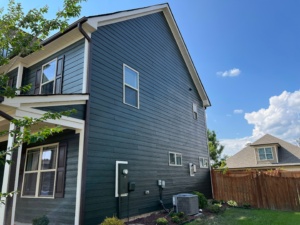
Your siding material determines how long exterior house painting will last in North Carolina’s challenging conditions. Each substrate responds differently to the state’s humidity, temperature swings, and UV exposure, creating distinct maintenance schedules.
Wood Siding
Wood requires repainting every 4-6 years in North Carolina, with older homes in established neighborhoods trending toward the shorter end of that range. Mature landscaping increases moisture retention near structures, accelerating paint breakdown. Wood absorbs moisture readily during humid months, then expands and contracts significantly as temperatures fluctuate. This movement stresses paint films beyond their elastic limits, causing cracks and peeling faster than on more stable substrates. Historic neighborhoods often feature original wood siding that demands vigilant maintenance schedules.
Fiber Cement Siding
Fiber cement products like HardiePlank maintain their paint jobs for 7-10 years before requiring attention. The material’s dimensional stability prevents the expansion-contraction cycles that plague wood surfaces. Moisture resistance keeps the substrate from absorbing water during humid periods, which protects both the siding and the paint film above it. Newer developments throughout the state have adopted fiber cement specifically for its reduced maintenance demands, though the initial painting still requires proper preparation and quality products to reach the decade mark.
Brick (Painted)
Painted brick presents unique considerations for homeowners. Once you paint brick, removal becomes extremely difficult, making the decision essentially permanent. Properly painted brick retains its finish for 12-15 years with comprehensive repainting, though touch-ups at the 7-year mark help maintain appearance and protection. The porous nature of brick can trap moisture in humid conditions, causing paint to bubble or peel if water vapor cannot escape. Older neighborhoods with painted brick exteriors require careful monitoring of the paint barrier, as any breach allows persistent humidity to penetrate masonry and compromise the substrate.
Aluminum Siding
Aluminum siding typically needs repainting every 5-10 years across North Carolina. The metal substrate doesn’t absorb moisture or expand with temperature changes like wood, but it does conduct heat efficiently. South and west-facing aluminum panels heat dramatically under afternoon sun, causing paint to cure improperly during application or break down faster over time. Chalking becomes visible as UV radiation degrades the paint binders, leaving a powdery residue on the surface. Coastal properties may see shorter intervals due to salt air accelerating oxidation beneath the paint film.
Stucco
Stucco exteriors require repainting every 5-7 years in North Carolina’s humid climate. The material develops hairline cracks as buildings settle and temperature fluctuations cause minor movements in the substrate. These cracks compromise paint adhesion, allowing moisture to penetrate and create larger failures. Humidity levels contribute to crack formation as stucco absorbs and releases moisture throughout seasonal cycles. Properties in areas with Mediterranean-inspired architecture must monitor crack development closely, as addressing them during repainting prevents water intrusion that could damage underlying structures.
Trim elements across all siding types need attention every 4-5 years due to their vulnerability and critical waterproofing function. Windows, doors, and fascia boards receive direct weather exposure from multiple angles, accelerating paint deterioration regardless of the main siding material’s performance.
Signs Your Home Needs Repainting Sooner
Warning signs often appear before your scheduled repainting interval arrives, signaling that North Carolina’s climate has accelerated paint deterioration beyond normal expectations. Recognizing these indicators early prevents moisture intrusion and substrate damage that leads to costly repairs.
Peeling or Cracking Paint
Paint that separates from the surface creates pathways for water infiltration. Once cracks develop or edges begin lifting, moisture penetrates the exterior materials underneath during rain events and humid periods. The substrate absorbs this water, causing further expansion that widens existing cracks. Wood surfaces particularly suffer from this cycle, as absorbed moisture leads to rot that extends far beyond the visible peeling area. Cracking typically starts at stress points like window corners, door frames, and board joints where movement concentrates.
Fading and Color Loss
Sun exposure gradually breaks down color pigments, creating uneven tones across different wall faces. South and west-facing surfaces fade noticeably faster than shaded areas due to intense afternoon UV radiation. The color change signals that paint binders have begun degrading, which means the protective qualities have diminished alongside the esthetic appeal. Dark colors show fading more dramatically than lighter shades, though all colors eventually succumb to photodegradation. Homes with significant color variation between wall faces need attention sooner than the standard schedule suggests.
Mold and Mildew Growth
Persistent mildew issues indicate the paint’s mildewcide additives have been depleted. North-facing walls that dry slowly after frequent rains become colonized first, showing dark streaks or patches that pressure washing removes only temporarily. Homes in heavily wooded areas experience accelerated algae growth that compromises both appearance and protection. The biological organisms feed on paint binders, creating surface roughness that traps more moisture and accelerates the deterioration cycle. Once established, mildew penetrates microscopic cracks and continues growing beneath the paint film.
Chalking and Surface Deterioration
Running a dark cloth over light-colored paint reveals powdery residue when UV breakdown has progressed significantly. This chalking represents paint binders disintegrating at the molecular level, leaving pigment particles loose on the surface. The degradation reduces the paint’s ability to protect underlying materials from weather exposure. Adhesion testing with painter’s tape shows compromised bonding in areas where humidity and temperature cycles have stressed the paint film beyond its elastic limits. South-facing surfaces and areas where different materials meet typically fail first under these variable conditions.
Exposed Wood or Substrate
Visible bare wood or siding indicates complete paint failure at localized areas. Water penetrates freely at these points, allowing humidity to damage the substrate directly. Wood rot around trim, windows, or door frames proves water has breached the paint barrier, a particular concern for older homes where original wood components remain common. Similarly, exposed fiber cement or other substrates lose their weather protection, making them vulnerable to moisture-related damage. These failures demand immediate attention regardless of when the last exterior house painting occurred, as delays allow structural deterioration that exceeds simple repainting costs.
Factors That Shorten or Extend Paint Life
Several controllable factors determine whether your exterior house painting reaches the upper or lower end of expected lifespans. Understanding these variables helps you make decisions that maximize paint durability in North Carolina’s demanding conditions.
Paint Quality and Type
Premium paint formulations engineered for southeastern climates can extend repainting intervals by 2-3 years compared to standard products. High-quality acrylic latex paints with added mildewcides prove particularly effective against the state’s persistent humidity. These advanced formulations contain higher percentages of titanium dioxide and acrylic resins, which provide superior coverage, color retention, and resistance to moisture-related breakdown. The additional cost of premium paint becomes negligible when spread across several extra years of protection. Whereas budget paints may save money initially, they fail faster under UV assault and biological growth, requiring more frequent repainting that ultimately costs more over time.
Sun Exposure on Different Home Sides
The orientation of each wall face creates drastically different maintenance requirements. South-facing surfaces endure maximum UV radiation and thermal cycling, often needing attention 2-3 years before north-facing walls on the same structure. West-facing walls suffer intense afternoon heat that accelerates both paint breakdown and substrate movement. Areas where different materials meet fail first under variable climate conditions, as expansion rates differ between substrates. Homeowners must adopt customized maintenance approaches rather than treating all sides equally, inspecting sun-exposed surfaces more frequently and planning touch-ups based on actual condition rather than arbitrary schedules.
Tree Coverage and Shade
Abundant tree canopy creates a double-edged effect on paint longevity. Shade reduces UV damage and keeps surfaces cooler, which extends paint life on the thermal cycling front. On the contrary, trees introduce moisture retention, organic debris, and biological growth that accelerate different failure modes. Pollen creates yellowish films each spring that embed in paint if not cleaned promptly. Tannins from tree debris cause discoloration when they remain in contact with painted surfaces during rains. Homes near wooded areas require annual gentle pressure washing below 1500 PSI to remove these contaminants before they bond permanently or degrade the paint film.
Previous Paint Job Quality
Preparation quality during the last exterior house painting job determines how well the current coat performs. Proper cleaning, scraping loose paint, repairing damaged areas, and priming surfaces correctly all improve durability significantly. Professional painters use products designed specifically for local weather conditions, selecting formulations that resist the state’s humidity and temperature patterns. Poor preparation creates adhesion failures that appear within months rather than years, as new paint cannot bond properly to contaminated or deteriorated surfaces beneath.
Home Age and Condition
Older homes in established neighborhoods face shortened paint life due to mature landscaping that increases moisture retention near structures. Dense foundation plantings trap humidity against walls, preventing proper drying after rain events. Original wood trim common in historic properties demands more frequent attention than modern materials, as decades of paint buildup and substrate movement create stress points where new failures begin.
Best Times of Year to Paint Exteriors in NC
Scheduling your exterior house painting project around North Carolina’s seasonal patterns directly impacts how long the finish lasts. Each season presents distinct advantages and obstacles that professional painters navigate to ensure proper application and curing.
Spring Painting Window: Pros and Cons
Conventional wisdom points to spring as ideal painting weather, but North Carolina’s abundant pollen creates serious application challenges. Microscopic pollen particles from oaks, pines, and native trees embed in wet paint, compromising both appearance and adhesion. The heaviest pollen loads occur from early March through mid-April, making this period unsuitable for exterior work.
Mid-April through early May offers a workable window after pollen subsides. Temperatures during this period typically range from 50-85°F, allowing paint to cure properly without extreme heat stress. Moderate humidity levels support adequate drying times, though spring thunderstorms still require weather monitoring.
Summer Considerations
June through August brings consistent warmth and long workdays, but humidity regularly exceeds 80% during July and August. This persistent moisture slows drying and can affect finish quality. Afternoon temperatures above 90°F cause paint to dry too rapidly on sun-exposed surfaces, creating lap marks and poor adhesion.
Professional crews start early at 7 AM, following shade around the house to avoid painting sun-baked walls during peak afternoon heat. Daily thunderstorms from June through August force crews to monitor radar constantly, sometimes stopping work early to protect wet surfaces.
Fall: The Optimal Season
September through November stands as the preferred painting window. September and October deliver ideal temperatures with highs in the 70s-80s and lows in the 50s-60s. Humidity drops significantly compared to summer months, allowing proper curing without moisture interference. Stable weather patterns reduce rain delays, and moderate temperatures prevent thermal stress on fresh paint films.
Winter Limitations
Temperatures below 50°F prevent proper paint curing, eliminating most winter months from consideration. Freezing conditions damage wet paint irreparably, while short daylight hours limit productive work time.
Conclusion
North Carolina’s climate demands a more proactive approach to exterior house painting than many homeowners expect. Humid summers, steady rainfall, intense UV exposure, and seasonal temperature fluctuations can shorten paint life and cause early signs of failure if your exterior is not maintained properly.
For most North Carolina homes, repainting every 5 to 10 years is a practical rule of thumb. Wood siding and stucco often need attention sooner, while fiber cement and properly painted brick can last longer with the right preparation and materials. However, visible warning signs like peeling, cracking, fading, mildew growth, chalking, or exposed wood mean your home may need repainting before the expected timeline.
The best way to protect your home is to inspect it regularly and address paint failure early. Waiting too long can allow moisture to reach the siding underneath, leading to repairs that cost far more than a standard repaint.
If you’re unsure whether your home is ready for repainting, Triangle Pro Painting can evaluate your exterior, recommend the right timing, and apply a durable finish designed for North Carolina’s climate.