
Cabinet painting and refinishing both promise to transform your kitchen, but they’re not interchangeable solutions. Your cabinets might look outdated, yet replacing them entirely can drain your budget fast. These two methods offer more affordable alternatives, however, choosing between them isn’t always straightforward. Painting involves applying new color over existing finishes, while refinishing strips cabinets down to bare wood before applying fresh stain or finish. Each approach has distinct advantages depending on your cabinet condition, budget, and desired outcome. This guide breaks down the key differences between painting and refinishing to help you determine which method delivers the results your kitchen needs.
What is Cabinet Painting vs. Cabinet Refinishing?
Most homeowners search for these services interchangeably, yet contractors often mean very different things when they use these terms. Understanding what each process actually involves will help you evaluate quotes accurately and avoid confusion when comparing contractors.
Cabinet Painting: Process and Materials
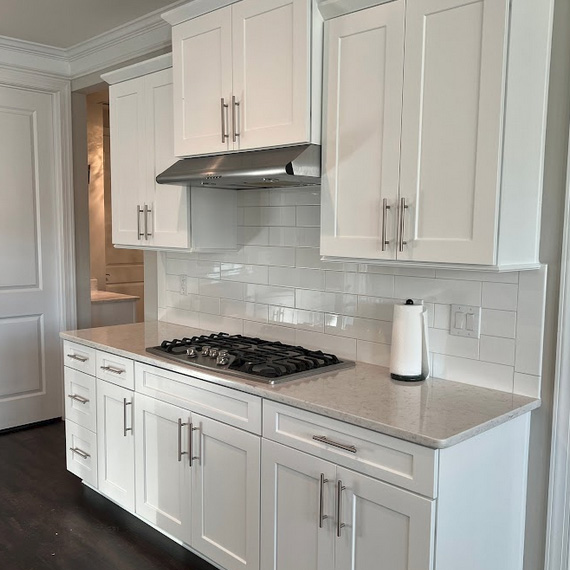
Cabinet painting applies a fresh coat of color directly over your existing cabinet surfaces. Contractors typically use latex or alkyd paints from brands like Benjamin Moore or Sherwin-Williams, applied with brushes, rollers, or basic spray equipment. The process involves light sanding to create surface adhesion, applying primer, then adding two coats of paint. Many contractors complete painting jobs on-site with doors still attached to frames, finishing the work within a few days.
Standard cabinet painting costs between $1,500 and $4,000 and delivers a lifespan of 2 to 4 years before chipping, peeling, or yellowing becomes visible. This approach works as a budget-friendly option when speed matters more than longevity. Paint covers the natural wood grain completely, allowing you to select any color from bright whites to deep statement shades. However, these standard paints remain thermoplastic after curing, meaning they stay soft and vulnerable to heat, moisture, and daily handling.
Cabinet Refinishing: Process and Materials
Cabinet refinishing involves a more intensive process using catalyzed coatings rather than standard paint. Contractors remove cabinet doors entirely, prep them in controlled environments, and apply multi-coat systems with professional HVLP spray equipment. The process includes full dust containment, grain filling when needed, bonding primers, and 2K polyurethane finishes that chemically cross-link into a permanent, factory-hard shell.
This method costs between $4,500 and $18,000+ depending on kitchen size, but delivers a lifespan of 15 to 20+ years. Refinishing can restore natural wood beauty through stains and clear coats, or it can provide durable colored finishes that withstand kitchen conditions far better than standard paints. Professional refinishing uses catalyzed coatings that form chemical bonds with the wood rather than relying only on surface grip.
Key Differences Between the Two Approaches
The distinction between these services goes beyond semantics. When you receive a $2,000 quote and an $8,000 quote for what sounds like the same work, you’re actually comparing two different services with vastly different processes and outcomes.
Cabinet painting represents a temporary solution. The latex and alkyd paints used in standard applications soften in heat, yellow under UV exposure, and lack the hardness needed for daily cabinet use. Doors stick to frames on warm days, edges chip where hands grip surfaces, and moisture works underneath the coating near sinks and dishwashers. On the other hand, refinishing delivers professional-grade results through advanced coating systems designed specifically for high-use surfaces.
The material quality drives the price and performance gap. Standard paint relies on thermoplastic formulas created for walls, not cabinets that get touched, gripped, slammed, steamed, and heated every day. Conversely, catalyzed coatings in refinishing projects create permanent finishes that resist the specific stresses kitchens impose on cabinet surfaces.
How Each Process Works
Understanding the actual workflow of each method reveals why they produce such different results. The steps contractors follow, the tools they employ, and the time each process demands all contribute to the final outcome on your cabinets.
Step-by-Step Cabinet Painting Process
Cabinet painting follows a straightforward sequence designed for speed. Contractors remove cabinet doors and hardware first, then sand surfaces to create adhesion points for the new finish. After cleaning away dust and debris, they apply primer to establish a smooth base layer. The painting itself involves 2-3 coats of latex or alkyd paint, with drying time between applications. Once the final coat cures, technicians reconnect hardware and reinstall doors. Many contractors complete this work on-site using brush, roller, or basic spray equipment, which allows them to finish quickly but limits the smoothness of the final surface.
Step-by-Step Cabinet Refinishing Process
Refinishing demands more intensive preparation and application. The process begins with sanding or stripping away the existing finish completely, exposing bare wood underneath. Technicians then repair minor dents, scratches, or surface damage that painting would simply cover up. For stained finishes, they apply wood stain followed by multiple sealant or clear coat layers. For colored finishes, bonding primers go down first, followed by catalyzed coatings sprayed in controlled environments. Grain filling happens when wood pores need leveling before topcoats. The final step involves buffing and polishing to achieve a factory-smooth finish, then reinstalling hardware once the coating fully cures.
Equipment and Materials Used
The equipment gap between these methods explains much of the quality difference. Standard cabinet painting uses tools from hardware stores: brushes, rollers, or entry-level spray equipment. Refinishing requires professional HVLP spray systems that atomize coatings into fine mist for smooth application. Dust containment systems keep particles from settling on wet finishes. Professional setups include controlled spray booths or sealed work areas where temperature and humidity stay consistent during curing. Painting happens wherever space allows, often in garages or on sawhorses. Refinishing needs dedicated environments where contaminants won’t compromise the catalyzed coatings that chemically bond to wood surfaces.
Time Required for Each Method
Cabinet painting typically takes 3-5 days from start to finish, depending on kitchen size and drying conditions between coats. Speed represents one of painting’s main advantages when you need quick results. Refinishing extends to 5-7 days because of the additional stripping, repair, and curing stages required for durable finishes. Catalyzed coatings need specific cure times before cabinets can handle normal use. While refinishing takes longer upfront, the extended lifespan means you won’t need to repeat the process for 10-15 years or more with proper maintenance.
Cost and Durability Comparison
Budget considerations often drive the initial decision between these methods, yet the upfront cost tells only part of the story. Lifespan and long-term maintenance expenses significantly impact which option delivers better value over time.
Cabinet Painting: Price Range and Lifespan
Standard cabinet painting runs between $1,500 and $4,000 for most kitchens. This lower entry point attracts homeowners seeking immediate visual change without major financial commitment. However, the lifespan of standard latex or alkyd paint finishes spans just 2 to 4 years before visible deterioration appears. Professional cabinet painting using higher-quality materials extends durability to 8-10 years before requiring a refresh, though this still falls short of refinishing longevity. The paint remains vulnerable to moisture and heat exposure common in kitchen environments, especially near sinks, dishwashers, and cooking surfaces.
Cabinet Refinishing: Price Range and Lifespan
Cabinet refinishing carries significantly higher upfront costs, ranging from $4,500 to $18,000+ depending on kitchen size and complexity. Small kitchens with 10-18 doors typically run $4,500-$7,500+, whereas mid-size kitchens with 19-34 doors cost $5,500-$10,500+. Large kitchens containing 35-49 doors range from $8,500-$14,500+, and oversized kitchens with 50+ doors reach $12,000-$18,000+. In return for this investment, refinished cabinets deliver 15 to 20+ years of service. Well-maintained refinished surfaces can extend beyond this range, with some installations lasting 10-15 years even under heavy use. The catalyzed coatings used in professional refinishing create permanent bonds that resist the specific stresses kitchens impose daily.
Why Standard Cabinet Paint Fails in Kitchens
Latex and acrylic formulations were engineered for walls, not cabinet surfaces. Walls rarely experience the touching, gripping, slamming, steaming, and heating that cabinets endure constantly. Standard paints remain thermoplastic after curing, staying soft and becoming even softer when exposed to heat. This fundamental material limitation produces predictable failure patterns within 12-18 months of installation:
- Sticking: Latex stays soft, causing doors to adhere to frames on warm days. Opening stuck doors tears paint directly off surfaces.
- Edge chipping: High-contact areas where hands grip doors lack the hardness to withstand repeated impact. Chips appear within months.
- Yellowing: Heat from stoves and ovens accelerates discoloration in white and light finishes, creating dingy appearances near cooking areas within a year.
- Moisture peeling: Steam and splashes near sinks and dishwashers work underneath latex coatings, lifting paint from wood surfaces.
- Climate acceleration: Kitchens reaching 80-90+ degrees amplify every failure mode, reducing three-year lifespans to eighteen months in hot regions.
Long-Term Value: Which Lasts Longer?
The durability gap creates a striking value difference when calculated over time. A $3,000 paint job lasting 4 years costs $750 annually, requiring multiple redos over two decades. In contrast, a $10,000 refinishing project lasting 20 years costs $500 annually with no repeated work needed. Refinishing eliminates the compounding expense of stripping failed paint before reapplying proper coatings, a process that adds thousands to future renovation costs.
Choosing Between Painting and Refinishing
Selecting the right method depends less on abstract preferences and more on your specific cabinet condition, renovation goals, and environmental factors. Neither approach wins universally, rather, each excels under particular circumstances.
When Cabinet Painting Makes Sense
Cabinet painting delivers optimal results when you need complete color transformation. Cabinets built with solid construction but outdated finishes benefit most from paint’s ability to cover existing surfaces entirely. The method works particularly well when budget constraints limit options or when timelines demand quick completion. Homeowners drawn to bold, modern colors find paint offers unlimited design flexibility, from crisp whites to deep navy or forest green statements. Paint changes your kitchen’s entire esthetic direction without the cost of replacement, making it suitable for rental properties or homes you plan to sell within a few years.
When Cabinet Refinishing is the Better Choice
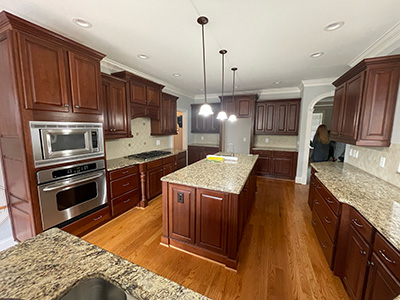
Refinishing proves superior when your cabinets feature high-quality wood worth preserving. Hardwoods like oak, cherry, or maple possess distinctive grain patterns that paint would conceal permanently. If natural wood appearance appeals to you yet your current finish looks worn or discolored, refinishing updates the surface while maintaining the material’s inherent character. The method makes sense when durability outweighs speed, equally important when you value long-term performance over short-term savings. Homeowners preferring warm, natural tones over synthetic colors find refinishing delivers the rustic or traditional esthetic paint cannot replicate.
Factors to Consider: Budget, Timeline, and Goals
Budget and speed often push decisions toward painting, whereas durability and wood preservation favor refinishing. These priorities rarely align perfectly, forcing you to weigh competing values. A tight timeline of 3-5 days points to painting, meanwhile refinishing’s 5-7 day requirement suits renovation schedules with flexibility. Your renovation goals matter equally. Temporary visual updates benefit from painting’s lower investment, on the other hand, permanent solutions justify refinishing’s higher upfront costs. Personal style preferences tip the balance, in that case where you love bold contemporary colors, painting provides what refinishing cannot, conversely, if warm wood tones define your vision, refinishing becomes non-negotiable.
Climate Considerations for Your Kitchen
Regional climate significantly impacts method selection. Kitchens regularly reaching 80-90+ degrees accelerate every failure mode in standard latex paint. Heat causes sticking between doors and frames, speeds yellowing in light finishes, and amplifies moisture damage near cooking surfaces. Hot climates reduce paint lifespans dramatically, turning 3-year finishes into 18-month projects. For instance, the same latex application lasting years in moderate climates fails rapidly in consistently warm environments. Refinishing’s catalyzed coatings resist heat-related deterioration, making them particularly valuable in hot regions where standard paint cannot withstand sustained temperature exposure.
Maintenance and Care Requirements
Proper maintenance routines determine whether your cabinets reach their expected lifespan or fail prematurely. Both painted and refinished surfaces require specific care approaches, though the intensity and frequency differ based on the coating system protecting your wood.
How to Maintain Painted Cabinets
Painted surfaces need gentle, consistent cleaning to prevent buildup that accelerates wear. Clean cabinet faces and edges with mild soap mixed with water, using soft cloths that won’t scratch the finish. Harsh chemical cleaners and abrasive scrubbing pads damage paint coatings, creating entry points for moisture and accelerating chipping along high-contact edges.
Touch up chips and scratches quickly when they appear. Small damage spots expand rapidly once moisture penetrates the paint layer, particularly near sinks and dishwashers where steam exposure stays constant. Keep matching paint on hand for immediate repairs, applying thin coats that blend with surrounding areas. Waiting weeks or months to address minor damage allows water infiltration that requires more extensive fixes later.
How to Maintain Refinished Cabinets
Refinished cabinets demand less frequent intervention but benefit from regular attention to wood conditioning. Wipe surfaces with soft, dry cloths to remove dust and cooking residue before particles embed in the finish. Unlike painted cabinets that hide wood entirely, refinished surfaces showcase natural grain that benefits from periodic wood polish applications to maintain luster and depth.
Reseal refinished cabinets every few years to preserve the protective barrier against moisture and heat. The resealing schedule varies based on kitchen usage intensity and environmental conditions, however, most refinished surfaces need fresh sealant coats between 3-5 years after initial application. This maintenance step extends cabinet life well beyond the 10-15 year baseline, particularly when quality wood underlies the finish.
Common Problems and How to Fix Them
Sticking doors indicate paint softening from heat exposure. Address this by ensuring adequate ventilation near cooking surfaces and avoiding temperature extremes. If sticking persists, light sanding followed by wax application on contact points reduces friction without full refinishing.
Edge chipping concentrates where hands repeatedly grip surfaces. Fix chips immediately with matching paint or stain to prevent moisture entry. For painted cabinets experiencing widespread chipping, the coating system itself may be failing, requiring professional assessment to determine whether spot repairs suffice or complete refinishing becomes necessary to avoid continued deterioration.
Yellowing near heat sources signals UV and temperature damage to paint formulations. No fix reverses this discoloration in latex finishes. Prevention requires using heat-resistant coatings initially or accepting periodic repainting as maintenance costs.
Conclusion
Cabinet painting and cabinet refinishing both offer a more affordable alternative to full cabinet replacement, but they serve different purposes. Painting is often the better choice when you want a fresh color, a faster update, and a lower upfront investment. Refinishing makes more sense when your cabinets are made from quality wood, you want to preserve the natural grain, or you need a more durable long-term finish.
The real difference comes down to preparation, materials, and expected lifespan. A quick paint job may refresh your kitchen for a short period, but a more professional coating or refinishing process can provide stronger protection against daily wear, moisture, heat, and repeated handling.
For Raleigh homeowners, the best choice depends on your cabinet condition, budget, style goals, and how long you plan to stay in the home. Before deciding, it’s worth having your cabinets professionally evaluated so you know whether painting, refinishing, or another option will give you the best return.
If you want a smooth, durable cabinet finish without the cost of full replacement, Triangle Pro Painting can help you choose the right approach for your kitchen and deliver a professional result built to stand up to everyday use.