
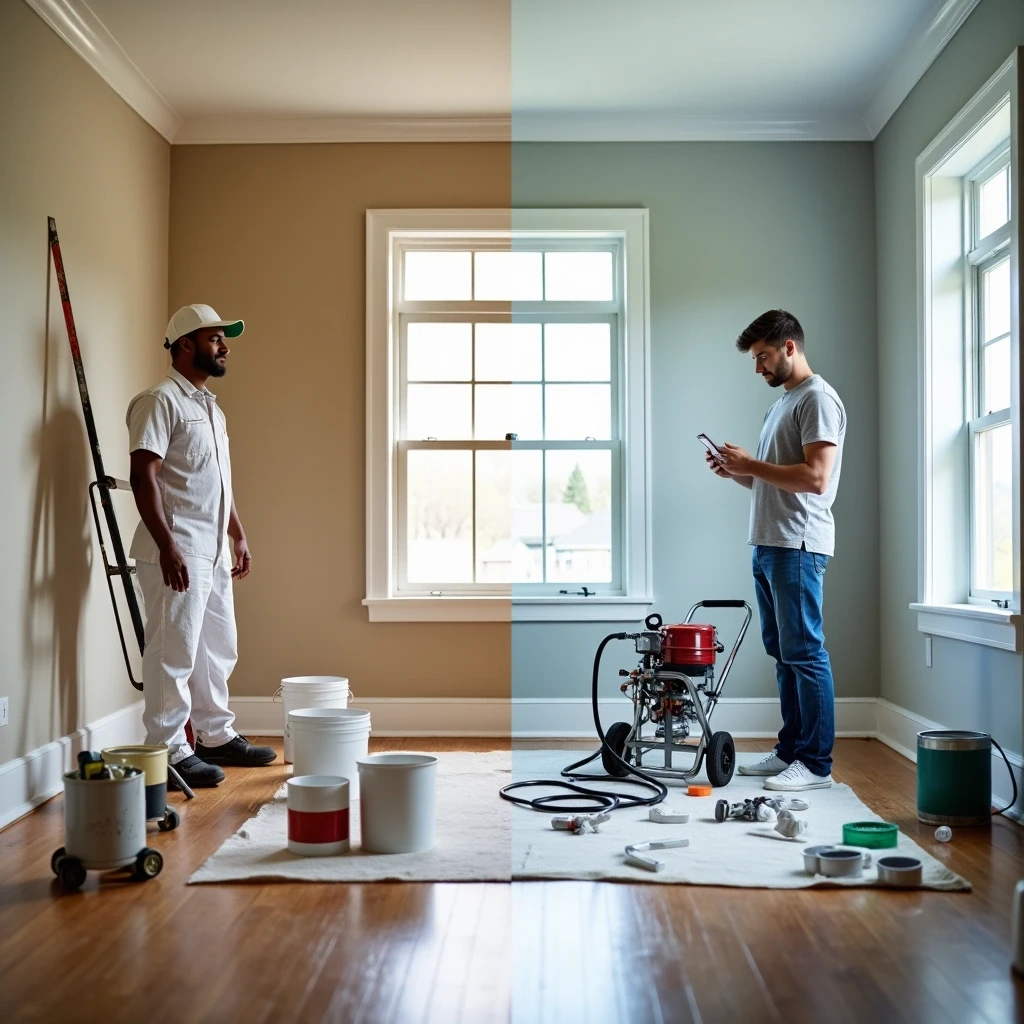
The cost of hiring a painter for your Raleigh home in 2026 ranges significantly, but is it actually cheaper to rent a sprayer and tackle the job yourself? Many homeowners assume DIY always saves money, but the math isn’t always straightforward. Rental fees, equipment costs, paint volume, and your time investment can quickly add up. This guide breaks down real Raleigh pricing for both options, including hidden expenses most people overlook. By comparing actual numbers for different project sizes, you’ll see exactly when hiring makes sense and when a sprayer rental is the smarter financial choice.
What You’ll Actually Pay a Raleigh Painter in 2026
Labor rates: $20-$75 per hour
Professional painters charge $20 to $50 per hour in most markets, while Raleigh contractors with extensive experience reach $75 per hour or higher. In high-demand periods, specialty painters command upwards of $100 per hour. Contractors rarely advertise hourly rates, yet they calculate based on time invested.
Crew composition affects what you actually pay. A three-person crew might average $35 per hour per painter, while specialized woodwork teams reach $60 per hour. Labor burden adds 30% to base wages for taxes, insurance, and benefits. A painter earning $25 per hour costs the contractor $32.50 after accounting for workers’ compensation, payroll taxes, and health insurance contributions.
Crew size directly impacts timeline and price. A solo painter charging $45 per hour takes longer than a four-person team, but the team’s combined hourly rate exceeds $150. Contractors balance speed against cost, typically deploying two to three painters for standard homes. Labor accounts for 85% of professional painting costs, making crew efficiency the primary cost driver.
Per square foot costs: $1.50-$4.30
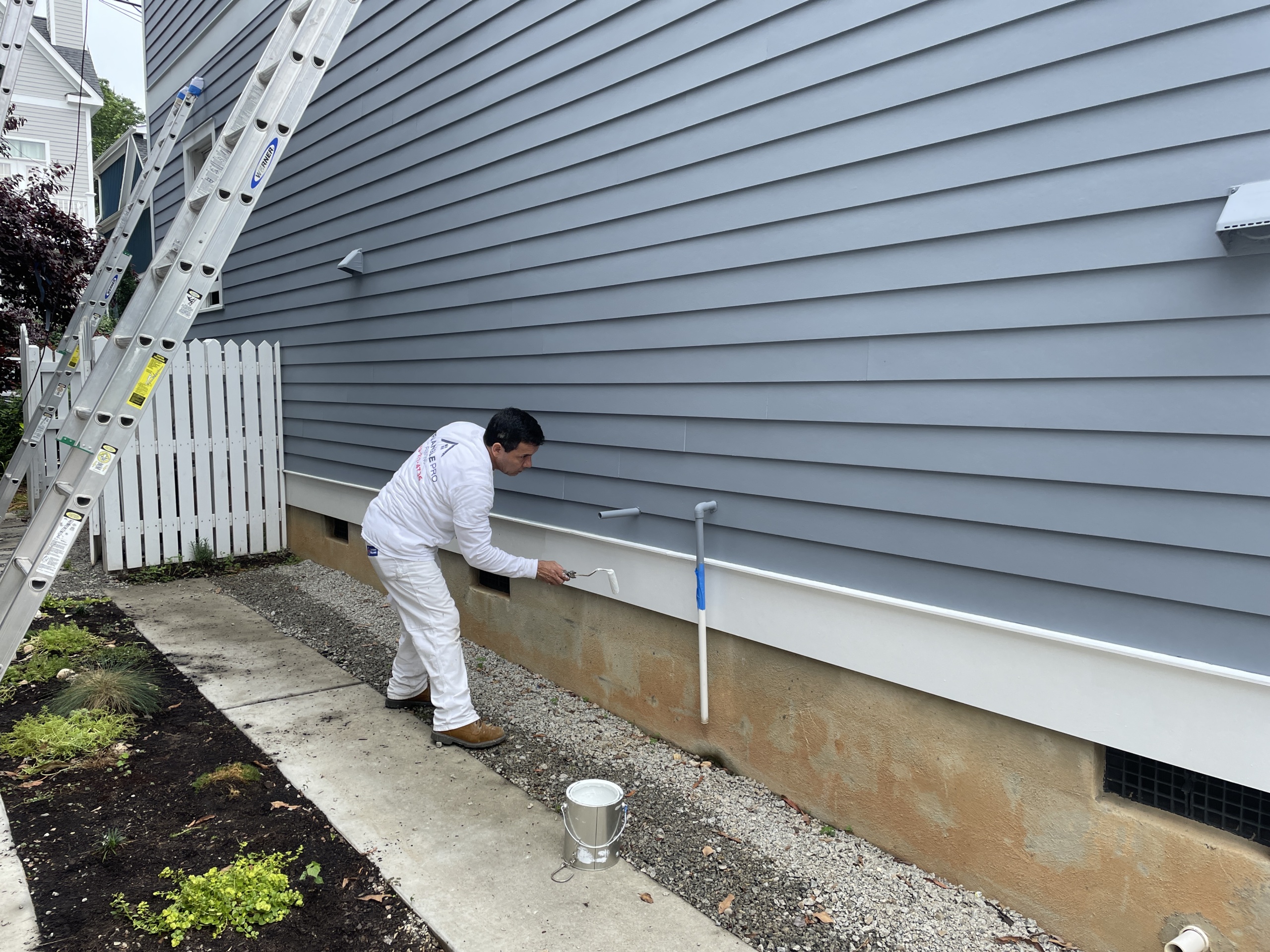
Square footage pricing varies significantly based on your siding material. Wood siding runs $1.50 to $3.00 per square foot, while vinyl costs $1.25 to $2.50 per square foot. Brick and stucco require special primers and more paint, pushing costs to $1.50 to $4.50 per square foot for brick and $1.80 to $3.60 for stucco. Fiber cement falls in the middle at $1.50 to $3.50 per square foot.
Material charges extend beyond paint. Primer, caulk, tape, brushes, and drop cloths add $0.50 to $1.00 per square foot in consumables. Contractors add 20% to 50% above wholesale paint costs. This markup covers procurement time, delivery coordination, storage risk, and damaged material replacement.
Project-based pricing for different home sizes
Project-based pricing dominates exterior house painting rates because square footage alone misses critical work scope elements. A 1,000-square-foot single-story home typically costs $1,500 to $3,500 for professional exterior painting. For a 1,500 square foot home, expect to pay $2,250 to $6,000.
A standard 2,000 square foot home sees quotes from $3,200 to $8,000. Professional repaints for homes in this range average $4,500 to $6,500, assuming basic prep and two coats of quality paint. For two-story homes between 1,500 and 2,500 square feet, costs increase to $3,000 to $6,200. A 2,500 square foot home can reach $3,750 to $10,000 depending on stories and architectural complexity.
Homes exceeding 2,500 square feet start at $4,500 and can reach $10,000 or more. A 3,000 square foot home typically costs $4,500 to $12,000. For homes requiring extensive prep work, add $500 to $2,000 to these estimates.
What’s included in professional quotes
Contractors allocate up to 3 hours per 100 linear feet for basic prep, which involves removing or taping hardware, scraping loose paint, and sanding rough areas. Patching up to 4 defects per 100 square feet falls within standard service scope. Pressure washing removes dirt, mildew, and loose paint at $0.45 to $0.56 per square foot.
Two coats represent the industry minimum for exterior surfaces. Contractors roll or brush two full coats, allowing 4 to 6 hours between applications depending on climate conditions. Trim painting starts at $2.59 to $5.40 per linear foot, covering masking hardware, preparing surfaces, caulking edges, spot priming, and applying two paint coats.
Contractors remove all trash, label leftover paint, and clean drips before leaving. Standard workmanship warranties span 3 years.
Real Costs of Renting a Paint Sprayer in Raleigh
Sprayer rentals present an alternative to professional painting costs, but equipment fees represent just the starting point. Equipment rentals for painting tools cost $50 to $200 per day, though specific rates vary based on sprayer type and local availability. Weekly rates typically offer better value for multi-day projects, reducing daily costs by 20% to 30% compared to consecutive single-day rentals.
Daily and weekly rental rates at local stores
Airless sprayers suitable for exterior home painting fall into the $50 to $200 daily rental range. Basic residential models occupy the lower end, whereas commercial-grade units with higher pressure capacity and larger paint reservoirs command premium rates. Weekly rentals reduce the per-day expense, making them more economical for projects requiring three or more application days.
Rental periods begin when you pick up the equipment, not when you start spraying. A Friday pickup for weekend work counts as three rental days even if you only spray on Saturday and Sunday. Most stores require returns during business hours, potentially extending your rental period if project completion runs into Monday.
Required equipment beyond the sprayer
The sprayer itself represents one component in a larger equipment package. Hoses, nozzles, and spray tips come standard with most rentals, but you’ll need additional supplies. Drop cloths, masking tape, plastic sheeting, and protective gear add $0.50 to $1.00 per square foot in consumables to your total cost. Contractors include these items in their overhead, whereas DIY projects require separate purchases.
Safety equipment including respirators, goggles, and disposable coveralls becomes non-negotiable for sprayer operation. Paint overspray travels farther than brush or roller application, demanding extensive masking of windows, doors, landscaping, and adjacent surfaces. These materials typically cost between $75 and $150 for standard home projects.
Paint volume needed for sprayer application
Sprayers consume 20% to 30% more paint than brush and roller methods on account of overspray and equipment priming. Paint costs $20 to $80 per gallon for standard grades, whereas premium options exceed $100 per gallon. A 2,000 square foot home requiring 15 gallons via traditional methods needs 18 to 20 gallons when sprayed.
This volume increase directly impacts material costs. At $50 per gallon mid-grade paint, the additional 3 to 5 gallons adds $150 to $250 to your project budget. Premium paints amplify this difference, potentially adding $300 to $500 in extra material costs compared to professional application methods that minimize waste.
Security deposits and insurance fees
Rental stores require security deposits ranging from $100 to $500 depending on equipment value. A $3,000 sprayer typically demands a $300 to $500 hold on your credit card until return inspection confirms no damage. This deposit releases within 3 to 7 business days after equipment return.
Damage waiver insurance costs an additional $15 to $30 per day. Declining this coverage leaves you liable for repair or replacement costs if equipment fails or sustains damage during your rental period. Late returns trigger penalty fees of $25 to $50 per day beyond your reserved period, quickly eroding any cost advantages over hiring professionals.
Hidden Expenses That Change the Math
Rental fees capture initial attention, but numerous additional expenses emerge once DIY projects begin. Surface preparation alone consumes substantial time before any paint touches your home. Contractors allocate up to 3 hours per 100 linear feet for basic prep, which involves scraping loose paint, sanding rough areas, and patching defects. Moderate prep work requiring flaky paint removal and bare spot priming adds 20% to 30% to labor hours. Major prep involving mildew treatment or wood repairs can double preparation time.
Prep work materials and time investment
Exterior-grade filler, sandpaper, scrapers, and spot primer add costs beyond your paint budget. Surface repair materials, solvents, and prep supplies included in contractor quotes become separate purchases for DIY projects. Caulking edges requires exterior-grade caulk tubes at $4 to $8 each, with larger homes needing 6 to 12 tubes. Power washing services that contractors provide at $0.45 to $0.56 per square foot either require renting additional equipment at $50 to $200 per day or purchasing a pressure washer outright.
Masking supplies for DIY spraying
Sprayer overspray travels considerably farther than brush application, demanding extensive surface protection. Plastic sheeting to cover windows, doors, landscaping, and adjacent surfaces costs $30 to $75 for adequate material. Masking tape specifically designed for exterior use runs $8 to $15 per roll, with standard homes requiring 4 to 8 rolls for proper coverage. Whereas contractors include these consumables in their overhead, DIY projects bear full retail costs.
Cleanup and disposal costs
Sprayer equipment requires thorough cleaning immediately after use to prevent paint from hardening inside lines and nozzles. Cleaning solvents cost $15 to $30 per gallon, with equipment flushing consuming one to two gallons per project. Paint disposal follows local hazardous waste regulations, prohibiting standard trash disposal. Many municipalities charge $5 to $20 per gallon for hazardous waste collection, adding unexpected costs for leftover paint and contaminated cleaning materials.
Practice materials and wasted paint
First-time sprayer users face a learning curve that consumes materials. Practice boards or scrap surfaces let you dial in spray patterns and pressure settings before touching your home, requiring 1 to 2 gallons of paint. Overspray from inexperience wastes an additional 10% to 15% beyond the typical 20% to 30% sprayer consumption increase, potentially adding 3 to 5 gallons to your total paint needs on a standard 2,000 square foot home.
Equipment damage or late return fees
Late returns trigger penalty fees of $25 to $50 per day beyond your reserved period. Projects extending past estimates quickly erode cost savings. Equipment damage during your rental period creates liability for repair or replacement costs unless you purchased damage waiver insurance at $15 to $30 per day. A damaged spray tip costs $20 to $40, whereas pump repairs reach $200 to $500 depending on the failure type.
Time Investment: Hours Required for Each Option
Time represents a cost factor beyond dollar amounts when comparing painting methods. Professional crews complete projects faster through experience and coordinated teamwork, whereas DIY approaches extend timelines considerably.
Professional crew completion timelines
A two to three-person professional crew finishes a standard 2,000 square foot home in 3 to 5 days under normal conditions. This timeline includes all phases: power washing with 24 to 48 hours drying time, surface preparation, primer application, two finish coats, and final cleanup. Contractors allocate up to 3 hours per 100 linear feet for basic prep work. The crew works simultaneously across different tasks, with one painter masking windows while another scrapes loose paint and a third primes repaired areas.
Crew efficiency stems from specialized roles and practiced coordination. A solo painter charging $45 per hour takes longer than a four-person team, but professional painters maintain consistent production rates that homeowners cannot match. Weather factors into scheduling, with contractors planning around rain forecasts and temperature requirements for proper paint curing.
DIY sprayer learning curve and application time
First-time sprayer users need practice time before touching their home’s exterior. Dialing in spray patterns, pressure settings, and application technique consumes several hours and 1 to 2 gallons of paint on test surfaces. Actual application proceeds slower than professional work on account of unfamiliarity with equipment and careful overspray avoidance.
Homeowners typically take 2 to 3 times longer than professional crews for the same project scope. A job requiring 40 hours of professional labor extends to 80 to 120 hours for inexperienced DIYers. This timeline assumes weekend and evening work, stretching projects across 3 to 4 weeks instead of one working week.
Prep and cleanup hours for homeowners
Surface preparation demands significant time investment before any painting begins. Moderate prep work requiring flaky paint removal and bare spot priming adds 20% to 30% to labor hours, while major prep involving mildew treatment or wood repairs can double preparation time. Sprayer cleanup requires immediate attention to prevent paint hardening inside lines and nozzles, adding 1 to 2 hours per application day.
Multiple coat drying periods
Two coats represent the minimum for exterior surfaces. Contractors allow 4 to 6 hours between applications depending on climate conditions. Temperature and humidity affect drying times, with cooler or humid conditions extending wait periods. These intervals prevent project compression, forcing multi-day schedules regardless of worker speed.
When Hiring Makes Financial Sense vs. When DIY Wins
Financial breakdowns reveal when each approach delivers better value, based on project scope and your specific circumstances.
Break-even analysis for small projects (under 1,500 sq ft)
Rental costs of $50 to $200 per day plus materials often exceed professional quotes for homes under 1,000 square feet costing $1,500 to $3,500. Given that extra paint consumption and hidden expenses add $300 to $600, DIY savings shrink considerably on smaller projects.
Medium to large homes: cost comparison
Professional quotes ranging $3,200 to $8,000 for 2,000 square foot homes create larger gaps where rental savings emerge. Homes exceeding 2,500 square feet at $4,500 to $12,000 offer maximum DIY potential, whereas rental equipment and materials might total $800 to $1,500.
Quality and warranty considerations
Standard workmanship warranties span 3 years with professional crews. Contractors include comprehensive prep determining paint longevity, whereas DIY projects lack coverage for application failures or premature peeling.
Your skill level and available time
First-time sprayer users take 2 to 3 times longer than professional crews. Projects requiring 40 professional hours extend to 80 to 120 DIY hours.
Projects where sprayer rental beats hiring
Simple repaints on well-maintained surfaces under 2,000 square feet with minimal trim work favor rentals when you possess painting experience.
Scenarios where professionals save money
Complex prep work, two-story homes, tight timelines, and warranty requirements make hiring more economical. Height increases costs 30% to 120% based on working elevation.
Conclusion
Hiring a painter versus renting a sprayer comes down to more than the equipment cost. While renting a sprayer may look cheaper at first, Raleigh homeowners also need to account for extra paint use, masking supplies, prep materials, cleaning time, rental deposits, insurance fees, and the learning curve that comes with using professional equipment.
For small or simple projects, DIY sprayer rental can make sense if you already have painting experience and enough time to prepare, spray, clean, and correct mistakes. But for larger homes, two-story exteriors, damaged surfaces, tight timelines, or projects where durability matters, hiring a professional painter often delivers better long-term value.
A professional crew brings the right equipment, surface preparation, application technique, and warranty protection—things that are difficult to recreate with a weekend rental. For many Raleigh homeowners, the real savings come from avoiding wasted materials, uneven coverage, overspray damage, and premature repainting.
If you want a clean, long-lasting exterior finish without the stress of equipment rental and trial-and-error application, Triangle Pro Painting can help. Our team provides detailed estimates, proper prep work, quality materials, and professional results designed to protect your Raleigh home for years.