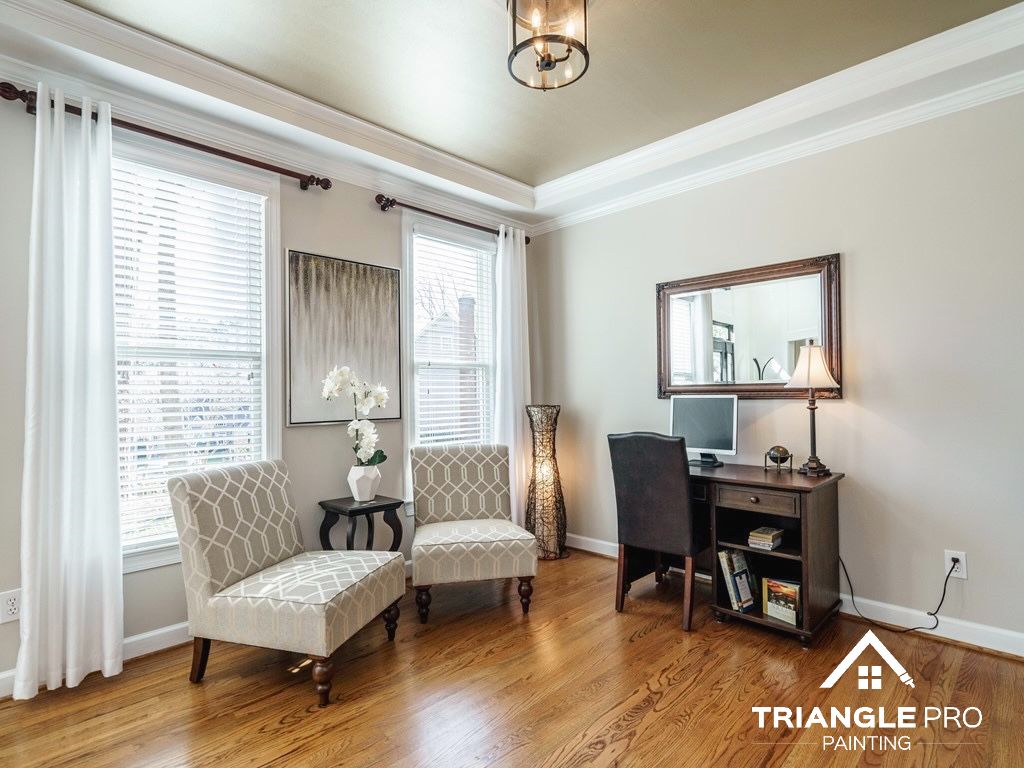
Did you know that choosing the wrong paint finishes can make or break your entire room design?
Actually, this seemingly small detail determines how your walls handle fingerprints, resist water damage, and reflect light throughout the space. While many homeowners focus exclusively on color, professional Raleigh Painter’s experts understand that the finish is equally crucial to achieving that picture-perfect result. The difference between a flat finish and semi-gloss can transform how a room feels – making spaces appear larger, ceilings higher, or imperfections less noticeable.
However, navigating the world of paint sheens doesn’t have to be overwhelming. Each room in your home has specific needs based on traffic, moisture levels, and esthetic goals. For instance, what works beautifully in your serene bedroom might be a cleaning nightmare in your busy kitchen.
This comprehensive guide will walk you through selecting the perfect paint finishes for every room in your home, helping you balance practical durability with your design vision. Whether you’re refreshing a single room or tackling your entire house, you’ll learn to think like a professional painter and make choices that stand the test of time.
Why Paint Finishes Matter More Than You Think
Paint finishes serve as the unsung heroes of interior design, affecting far more than just the sheen of your walls. Professional painters recognize that the right finish dramatically impacts both the longevity and visual impact of your paint job. Let’s explore why these finishes deserve careful consideration beyond mere esthetics.
How finishes affect durability and appearance
The finish you select determines how your paint withstands daily life. Flat and matte finishes, although visually appealing, typically offer less resistance to stains and scrubbing compared to their glossier counterparts. In contrast, semi-gloss and gloss finishes create a more resilient surface that handles repeated cleaning without deteriorating.
Consider this practical reality: walls in high-traffic areas face constant challenges—from fingerprints and scuff marks to occasional splashes. The appropriate finish creates a protective barrier that maintains your paint’s integrity despite these daily assaults. As Brandon Griffin, founder of Triangle Pro Painting, notes, “Every project is different, and every client has unique needs and wants.” This philosophy applies perfectly to finish selection.
Appearance goes beyond basic color perception. Different finishes interact with light to create distinct visual effects:
- Flat finishes: Absorb light, minimizing imperfections but creating a softer, more muted color appearance
- Satin finishes: Offer a subtle glow that enhances color depth without excessive shine
- Glossy finishes: Reflect more light, making colors appear more vibrant and spaces feel more expansive
Durability concerns extend to maintenance requirements as well. Surfaces painted with higher-sheen finishes typically require less frequent repainting, making them cost-effective long-term investments for busy areas of your home.

The role of lighting and surface texture
Lighting fundamentally transforms how paint finishes appear on your walls. Natural daylight reveals colors and textures differently than artificial lighting does. Furthermore, the direction and intensity of light sources highlight or minimize the effect of your chosen finish.
Morning light differs from evening light, creating varying appearances throughout the day. North-facing rooms receive cooler, more diffused illumination that may flatten the appearance of some finishes, whereas south-facing spaces with direct sunlight amplify sheen differences.
Surface texture presents another critical consideration. Walls with noticeable imperfections often benefit from flatter finishes that absorb rather than reflect light, thereby masking irregularities. Conversely, perfectly smooth surfaces can showcase glossier finishes without drawing attention to surface flaws.
Many homeowners underestimate this interplay between texture and finish. A wall with minor imperfections can appear significantly worse when painted with high-gloss paint that highlights every bump and depression. Professional painters often recommend addressing surface issues before selecting highly reflective finishes.
The angle from which you view painted surfaces also affects perception. Standing perpendicular to a wall reveals a different appearance than viewing it from an angle, especially with higher-sheen finishes that create more pronounced light reflection variations.
Additionally, finish selection impacts color perception itself. The same paint color appears subtly different across various finishes—generally appearing slightly darker in flat finishes and more vibrant in glossier ones. This phenomenon means color samples should ideally be tested in the specific finish you plan to use.
By understanding these nuanced relationships between finish, durability, appearance, lighting, and texture, you’ll make more informed decisions that enhance both the beauty and functionality of your living spaces.
Understanding the Types of Paint Finishes
Selecting the right paint finish requires understanding how each type performs in different environments. Most homeowners face confusion when standing before the array of options at their local paint store. Fortunately, mastering the basics of paint finishes isn’t as complex as it might initially seem.
Flat and matte finishes
Flat finishes contain minimal reflective particles, creating a non-reflective surface that absorbs light instead of bouncing it back. This characteristic makes flat paint exceptionally good at hiding wall imperfections—dimples, small cracks, and patches virtually disappear under this finish.
Matte finishes offer slightly more durability than flat while maintaining the same low-luster appearance. Both options create a sophisticated, velvety look that adds depth to walls. Moreover, these finishes allow for easy touch-ups, as new paint blends seamlessly with existing coats.
The primary drawbacks of these finishes center on cleaning difficulties. Once marked or scuffed, flat walls often require complete repainting instead of spot cleaning. Subsequently, reserve these finishes for:
- Ceilings
- Formal dining rooms
- Adult bedrooms
- Low-traffic areas
- Spaces needing visual texture correction
Eggshell and satin finishes
Eggshell finishes strike the perfect balance between flat and glossier options, offering a subtle sheen similar to an actual eggshell. This modest luster provides improved durability without excessive shine. Walls painted with eggshell finish can withstand occasional cleaning without damage.
Satin finishes take durability a step further, featuring a soft, pearl-like glow that works beautifully in most living spaces. These finishes reflect light gently, creating warm, inviting rooms while still hiding minor wall flaws reasonably well.
Both options provide excellent versatility, making them popular choices for:
- Living rooms
- Children’s bedrooms
- Family rooms
- Hallways
- Home offices
Many professional painters recommend satin finishes for their optimal balance of appearance and practicality. Throughout active family homes, these middle-range sheens offer sufficient protection against daily wear without drawing attention to themselves.
Semi-gloss and gloss finishes
Semi-gloss finishes contain significantly more resins, creating a visibly shiny surface that stands up exceptionally well to moisture and cleaning. This durability makes semi-gloss ideal for areas exposed to splashes, humidity, or frequent handling.
Gloss finishes—the shiniest option—create a brilliant, reflective surface that’s virtually impervious to stains and moisture. The hard, almost plastic-like coating repels water and resists damage, though it requires meticulous surface preparation beforehand.
These high-shine options excel in:
- Kitchens
- Bathrooms
- Laundry rooms
- Doors and trim
- Cabinetry
The trade-off for this durability is that both finishes highlight every surface imperfection. Consequently, walls must be perfectly prepared before application—sanded smooth and properly primed. Any shortcuts in preparation become painfully obvious once these reflective finishes are applied.
One practical tip from painting professionals: consider creating visual interest by combining finishes within a single room. For instance, using flat paint on ceilings, eggshell on walls, and semi-gloss on trim creates subtle texture variation while addressing the functional needs of each surface.
Room-by-Room Guide to Choosing Paint Finishes
Every room in your home serves a different purpose, facing unique challenges from traffic patterns to moisture exposure. Selecting appropriate paint finishes for each space ensures both esthetic appeal and practical durability.
Living room: balancing style and comfort
Living rooms typically require a balance between appearance and cleanability. Since these spaces host guests and family gatherings, walls must withstand occasional cleaning without losing their visual appeal.
Eggshell and satin finishes excel here, offering subtle sheen that enhances the room’s warmth while providing enough durability for periodic wipe-downs. These mid-range finishes reflect light gently, creating an inviting atmosphere without highlighting wall imperfections.
For homes with young children or pets, consider satin finish for its superior cleanability. Otherwise, eggshell provides a more sophisticated look with adequate performance for typical living room conditions.
Kitchen: handling moisture and stains
Kitchens demand paint finishes that stand up to cooking splatters, food stains, and frequent cleaning. The combination of moisture, grease, and daily activity makes this room particularly challenging for wall finishes.
Semi-gloss paint delivers the performance needed in this environment. Its smooth surface allows easy removal of cooking residue and water marks without deteriorating. The higher sheen also reflects light effectively, brightening cooking spaces and making small kitchens appear larger.
For kitchen ceilings, however, eggshell finish offers sufficient protection against occasional steam while maintaining a less reflective appearance overhead.
Bathroom: choosing for humidity resistance
Bathrooms face extreme conditions—constant humidity fluctuations, water splashes, and cleaning chemicals. Paint failure in these spaces often occurs from moisture penetration leading to peeling or mildew growth.
Semi-gloss or gloss finishes provide essential protection through their moisture-resistant properties. Their non-porous surfaces prevent water absorption that would otherwise damage standard wall coverings. This resistance makes them ideal for areas directly adjacent to showers and tubs.
For powder rooms with less humidity exposure, satin finish offers a compromise between moisture protection and a softer appearance.
Bedroom: creating a calming atmosphere
Bedrooms benefit from the soft, light-absorbing qualities of flatter finishes. Since these private spaces typically experience minimal wear and tear, durability concerns are secondary to esthetic considerations.
Flat or matte finishes create a peaceful, non-reflective surface perfect for rest areas. These finishes absorb rather than reflect light, establishing a serene environment conducive to relaxation. Their velvety appearance adds sophistication while concealing minor wall imperfections.
For children’s bedrooms, nevertheless, upgrade to eggshell finish for improved cleanability without sacrificing much of the matte appearance.
Hallways and entryways: durability first
Hallways, entryways, and staircases endure the most contact in most homes. From brushing shoulders against walls to luggage scrapes and fingerprints around light switches, these transitional spaces require maximum durability.
Satin or semi-gloss finishes provide essential scuff resistance in these high-traffic zones. Their washable surfaces allow easy maintenance without frequent repainting. Additionally, these finishes stand up well to repeated cleaning—a necessity for areas that accumulate dirt from outside.
For trim and doors throughout these spaces, semi-gloss finish offers extra protection against wear while creating visual definition between walls and woodwork.

How to Match Paint Finishes with Wall Conditions
The condition of your walls plays a crucial role in determining which paint finish will deliver the best results. Even the most beautiful color in an inappropriate finish can highlight flaws or fail to achieve your design vision. Understanding how to match finishes with your specific wall conditions ensures professional-looking results.
Dealing with imperfections
Wall imperfections come in many forms—nail holes, minor cracks, uneven patches, and subtle texture variations. Addressing these issues starts with proper preparation, yet even well-prepared walls may retain some subtle flaws. In such cases, the finish selection becomes your most powerful tool.
Flat and matte finishes excel at masking wall irregularities because they absorb rather than reflect light. This light-absorbing quality prevents shadows from forming around small bumps or depressions, effectively camouflaging imperfections. For older homes with plaster walls or homes with multiple drywall repairs, these low-luster options provide significant visual improvement without extensive surface work.
Preparation requirements vary by finish choice:
- Flat/matte: Requires basic preparation but forgives minor imperfections
- Eggshell/satin: Needs moderate surface preparation with attention to larger flaws
- Semi-gloss/gloss: Demands meticulous preparation with no visible imperfections
When to avoid glossy finishes
Highly reflective finishes create a stunning visual impact in perfect conditions but can become problematic in several situations. First, avoid glossy finishes on any wall with textural issues or uneven surfaces. The reflective properties that make these finishes attractive simultaneously draw attention to every bump, dip, and irregularity.
Secondly, exercise caution with glossy finishes in rooms with direct, harsh lighting—particularly natural light streaming through large windows. This combination maximizes sheen visibility, potentially creating distracting glare that overpowers other design elements.
Lastly, reconsider high-gloss options in spaces where you want to create a soft, relaxing atmosphere. The reflective nature of these finishes creates a more energetic, vibrant space that might contradict your comfort goals.
Using sheen to highlight or hide features
Strategic variation in paint sheen allows you to control which architectural elements draw attention. Consider using higher-sheen finishes to highlight desirable features while downplaying less attractive areas with flatter finishes.
For instance, applying semi-gloss to beautifully crafted trim draws the eye to this craftsmanship, while keeping surrounding walls in a flatter finish prevents visual competition. This technique works equally well for accent walls, built-in shelving, or architectural details you wish to showcase.
Conversely, use lower-sheen finishes to minimize attention to functional necessities like ceiling vents, access panels, or irregular architectural transitions. By matching these elements to surrounding surfaces in both color and finish, they visually recede rather than drawing unwanted attention.
Pro Tips for a Flawless Finish
Achieving professional-quality results with paint finishes hinges on mastering a few critical techniques that expert painters prioritize on every project.
Test samples in natural and artificial light
Paint colors and finishes appear remarkably different depending on lighting conditions. Accordingly, test your chosen finish in both morning and evening light before committing. Small test patches on different walls reveal how shadows and light sources interact with your selected sheen throughout the day. This step primarily prevents disappointment after the entire room is painted.
Use the right tools for each finish type
Tools dramatically influence your finish quality:
- Flat/matte finishes: Medium-nap rollers (3/8″) distribute paint evenly without creating excess texture
- Satin/eggshell: Short-nap rollers (1/4″) minimize stippling while maintaining smooth application
- Semi-gloss/gloss: High-density foam rollers or professional-grade brushes prevent visible brush marks
Quality tools aren’t merely a recommendation—they’re essential for achieving the consistent application that defines professional results.
Don’t skip surface prep
Surface preparation undeniably makes the biggest difference between amateur and professional-looking finishes. Clean walls thoroughly, fill holes, sand imperfections, and apply primer where needed. Professional crews at Triangle Pro Painting understand this fundamental truth—their meticulous attention to preparation ensures pristine results. Even the highest-quality paint in perfect lighting looks subpar when applied to poorly prepared surfaces.
Conclusion
Selecting the right paint finish transforms ordinary walls into design statements while ensuring lasting durability throughout your home. Though often overlooked, paint finishes serve as crucial elements that affect both esthetics and functionality. Flat finishes create serene bedrooms, while semi-gloss options stand up to kitchen splashes and bathroom humidity.
The condition of your walls ultimately dictates which finish will deliver optimal results. Uneven surfaces benefit from flat or matte options that hide imperfections, whereas perfectly smooth walls showcase the reflective beauty of glossier alternatives. Additionally, considering the specific needs of each room—traffic patterns, moisture exposure, and cleaning requirements—ensures your paint job remains beautiful for years.
Remember that lighting dramatically changes how finishes appear. Testing samples under both natural daylight and evening illumination prevents disappointment after completing your project. Equally important, quality tools and thorough surface preparation make the difference between amateur results and professional-looking walls.
Armed with this knowledge about paint finishes, you can now approach your next painting project with confidence. The right finish selection balances your esthetic vision with practical durability needs. Your walls will not only look stunning but also perform beautifully—withstanding daily life while enhancing the character of each unique space in your home.
Not sure which finish is right for your home? A professional Raleigh painter can help you choose finishes that last.