


When considering interior painting Raleigh homeowners face a critical question: tackle it yourself or hire professionals? That fresh coat of paint might seem like the perfect weekend project, but does DIY actually save money in 2026?
The average Raleigh homeowner spends between $2,800 and $4,200 for professional interior painting of a 2,000-square-foot home. However, this sticker price doesn’t tell the whole story. Beyond immediate costs, factors like preparation quality, material selection, and time investment dramatically impact the true price difference between DIY and professional painting.
In Raleigh’s humid climate, proper paint application becomes even more crucial for longevity. Many homeowners find their DIY projects needing touch-ups within 1-2 years, while professional work typically lasts 5-7 years with minimal maintenance. This durability factor alone can significantly change the cost equation.
Whether you’re refreshing your Five Points bungalow, updating your North Hills colonial, or modernizing your downtown condo, understanding the real cost implications of DIY versus professional interior painting helps you make the best decision for your home and budget. This guide breaks down what you actually pay—in both dollars and time—when you choose either approach.
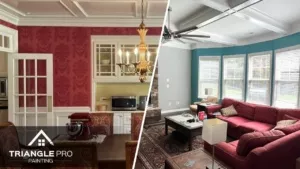
Scope of Work: What DIY and Pro Painting Really Involve
The difference between DIY and professional interior painting goes far beyond who holds the brush. Professional painters in Raleigh approach each project as a systematic process requiring specific expertise, tools, and techniques that dramatically impact the final result.
Surface Prep: Taping, Sanding, and Priming
Professional painters recognize that proper preparation determines the quality and longevity of the finished product. For professionals, preparation isn’t just a step—it’s often 40-60% of the entire project.
In contrast, DIY painters frequently underestimate prep work requirements. Professional painters meticulously address:
- Rotted wood repair and replacement
- Moisture damage remediation
- Drywall imperfections and cracks
- Gap caulking and sealing
- Surface sanding for adhesion
As one Triangle Pro Painting customer noted, “The crew provided extensive photos and marked the trim with visible spray paint so we could see for ourselves that the trim required replacement and new paint.” This level of inspection and transparency represents the thoroughness professionals bring to preparation.
Furthermore, professionals understand that textured surfaces require approximately 30% more paint than smooth surfaces due to increased surface area. Additionally, they know that dramatic color transitions often require multiple coats for proper coverage, especially when changing from dark to light shades.
Tools and Materials: Brushes, Rollers, and Drop Cloths
The quality gap between DIY and professional equipment is substantial. Professional painters invest in premium tools that consistently outperform consumer-grade alternatives.
Professional painters typically prefer premium paints despite their higher upfront cost because they:
- Provide more consistent application properties
- Create smoother, more uniform finishes
- Adhere better to properly prepared surfaces
- Resist dirt and are easier to clean
- Maintain color integrity longer against UV exposure
Beyond basic brushes and rollers, professionals utilize specialized equipment for particular challenges. Painting ceilings often demands specialized equipment, particularly when dealing with popcorn or textured finishes that DIYers struggle to handle effectively.
For environmentally conscious Raleigh homeowners, professionals also offer access to low-VOC (Volatile Organic Compound) and zero-VOC formulations that typically cost 10-20% more than conventional paints but deliver valuable benefits: they minimize harmful emissions while allowing spaces to be occupied sooner after painting, reducing project disruption.
Skill Level Required: Cutting In, Edging, and Finishing
Technical painting skills represent perhaps the most significant difference between DIY and professional results. Professionals excel at:
Creating crisp, clean lines at color transitions Properly preparing surfaces for maximum adhesion Identifying and addressing underlying issues before they cause problems
Cutting in—painting a straight line where walls meet ceilings or trim—requires steady hands and years of practice. Professional painters develop muscle memory that allows them to create perfect lines without tape, while most DIYers struggle with this fundamental technique.
Professional painters balance crew size against project requirements to maximize efficiency without compromising results. As one satisfied customer explained, “They were dependable and worked so very hard each day.” This efficiency means professional painters typically complete projects in a fraction of the time a DIY approach would require.
The composition and size of a painting crew substantially influence both project duration and final quality. Larger crews complete projects faster yet require more coordination to maintain consistent standards. Smaller teams might take longer but often deliver more meticulous attention to detail in certain scenarios.
Professional results come from this combination of proper preparation, quality materials, and refined technique—elements that explain why professional paint jobs typically last 5-7 years versus 1-2 years for many DIY efforts in Raleigh’s humid climate.
Cost Breakdown: DIY vs Pro Interior Painting in Raleigh
Beyond surface appearances, understanding the true cost gap between DIY and professional interior painting requires examining several distinct expense categories. The final price tag often surprises Raleigh homeowners once all factors enter the equation.
Material Costs: Paint, Supplies, and Equipment Rental
Although DIY painters initially save on labor, material expenses frequently exceed expectations. Professional painters select premium paints that, although costlier upfront, deliver superior performance:
- Better consistency during application
- Smoother, more uniform finishes
- Superior surface adhesion
- Enhanced dirt resistance and cleanability
- Greater color stability against UV exposure
Interior projects involving textured surfaces demand considerably more paint—typically 30% additional product compared to smooth walls. Moreover, dramatic color transitions, such as changing from dark to light shades, usually necessitate multiple coats for proper coverage.
Environmental considerations further affect material budgets. Low-VOC (Volatile Organic Compound) and zero-VOC paints generally cost 10-20% more than standard formulations yet provide substantial benefits through reduced harmful emissions and quicker room habitability after completion.
DIYers must purchase or rent equipment professionals already own, including ladders, sprayers, specialty rollers, drop cloths, tape, sandpaper, caulk, primer, and various brushes. Consequently, first-time DIY painters often invest hundreds in supplies they’ll seldom use afterward.
Labor Costs: Your Time vs Contractor Rates
Professional painting crews complete projects remarkably faster than DIY approaches. As one Triangle Pro customer remarked, “They were dependable and worked so very hard each day.” This efficiency stems from both experience and proper equipment.
Professional teams balance crew size strategically—larger crews finish faster yet require coordination to maintain quality, whereas smaller teams may work longer yet deliver meticulous attention to detail for intricate projects.
For DIYers, the labor “savings” comes at the cost of personal time. A professional team might complete an average Raleigh home’s interior in 3-5 days, yet the same project could consume 2-3 weekends plus evenings for homeowners, depending on experience level and available time.
In essence, Raleigh painting contractors structure their teams based on project requirements rather than simply assigning whoever’s available—an approach ultimately delivering better value despite potentially higher hourly rates.
Hidden Costs: Mistakes, Rework, and Delays
Perhaps most significant are the hidden expenses many DIYers never anticipate. Professional painters identify and address underlying issues before they cause problems, including:
Fixing rotted wood Addressing moisture damage Repairing drywall imperfections Caulking gaps Sanding rough surfaces
As one Triangle Pro customer noted about unexpected repairs: “The crew provided extensive photos and marked the trim with visible spray paint so we could see for ourselves that the trim required replacement and new paint.”
Professional services in Raleigh typically include free estimates, insured workers, warranties, multiple payment options, and comprehensive customer service—elements influencing pricing yet delivering significant peace of mind.
Many DIY projects eventually require professional correction, essentially doubling the project cost. Furthermore, the difference in longevity proves substantial—professional work typically lasts years longer, spreading the investment across a significantly extended timeframe compared to DIY efforts requiring frequent refreshing.
Beyond monetary considerations, DIY projects often create household disruption for much longer periods. Meanwhile, professional teams minimize disruption through efficiency, proper containment, and thorough cleanup—value difficult to quantify yet immediately apparent during project execution.
Time Investment and Project Duration
Time—perhaps the most overlooked factor when choosing between DIY and professional painting services in Raleigh. The hours invested often tell a more complete story than dollar figures alone.
DIY Timeline: Weekends and Evenings
Interior painting as a DIY project typically extends far beyond initial expectations. Homeowners must sandwich painting tasks between work responsibilities and family obligations, often resulting in a start-stop approach that extends project timelines substantially.
What professionals complete in days frequently stretches across 2-3 weekends plus weeknights for DIY painters. This fragmented timeline creates several challenges:
- Prolonged disruption to living spaces
- Inconsistent application as paint dries between sessions
- Extended exposure to paint fumes
- Greater risk of dust contamination between painting sessions
First-time DIY painters frequently underestimate the time required for proper surface preparation—a critical step that professionals recognize consumes 40-60% of total project time.
Pro Timeline: Full Crew Efficiency
Professional painting crews complete projects in a fraction of the time DIY approaches require. This efficiency stems from experience, specialized equipment, and strategic team composition.
Professional companies carefully balance crew size against project requirements. Larger crews finish faster yet need more coordination to maintain quality standards. Conversely, smaller teams might work longer but deliver more meticulous attention to detail for intricate projects.
Customers consistently highlight the productivity of professional teams: “They were dependable and worked so very hard each day.” Production managers like Efren Vences maintain communication throughout: “He showed up on time and communicated updates on the crew’s schedule.”
Even with unpredictable challenges, professional teams remain adaptable. As one customer noted: “They kept me updated at every stage, adjusted their schedule around the weather, and made sure the job was done with excellence.”
Disruption to Daily Life: Setup and Cleanup
Beyond time investments, consider daily disruption factors. DIY projects often mean living among half-finished rooms, displaced furniture, and painting supplies for extended periods.
Professional teams minimize household disruption through systematic approaches:
- Daily setup and cleanup procedures
- Proper containment of dust and fumes
- Organized workspace management
- Efficient material handling
Professionals typically conduct thorough consultations before beginning work, establishing clear expectations for daily routines and project milestones. Throughout the project, they maintain communication about schedules and progress, helping homeowners plan around the inevitable disruptions.
Upon completion, professional teams conduct final walkthroughs, immediately addressing any touch-ups without hesitation—a stark contrast to DIY projects that often leave lingering “I’ll fix that later” items.
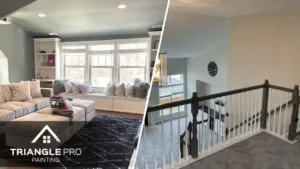
Quality and Finish: What You See vs What You Get
The visible difference between DIY and professional interior painting often becomes apparent long after the paint dries. Professional results deliver more than just esthetic appeal—they provide lasting performance that justifies the investment.
Paint Application Consistency
Professional painters create smoother, more uniform finishes that immediately showcase the difference in skill level. This consistency stems from several factors:
Firstly, professionals have mastered techniques for creating crisp, clean lines at color transitions—a skill that typically takes years to develop. Their experienced hands achieve precision that rarely requires touch-up work, unlike DIY efforts that often show telltale inconsistencies.
Professional teams also apply paint with remarkably consistent thickness. As one Triangle Pro customer noted, “The work done by our team is the best workmanship I have ever seen. Providing a top-notch job was clearly important to them and they take pride in doing good work.” This commitment to craftsmanship distinguishes professional painters from those simply offering the lowest price.
Durability and Touch-Up Needs
The quality gap between DIY and professional painting becomes increasingly evident over time. Professional application adheres better to properly prepared surfaces, resists dirt accumulation, and maintains color integrity despite exposure to Raleigh’s humid conditions.
Professionals select paints that maintain color stability against UV exposure, even for interior spaces with significant natural light. These premium products create finishes that resist fading, maintain their esthetic appeal, and require minimal maintenance over their lifespan.
Throughout Raleigh, humidity challenges paint durability. Professional application addresses these specific climate conditions, creating finishes that withstand environmental stresses better than typical DIY work. Indeed, one local customer remarked, “Our home hasn’t looked this good since it was originally built in the 80’s and we are beyond thrilled with the results.”
Warranty and Satisfaction Guarantees
Notably, professional painting companies provide warranties that protect your investment—something DIY projects simply cannot match. These guarantees offer peace of mind that any issues will be addressed promptly without additional expense.
Triangle Pro Painting, for instance, confidently offers a “no-questions-asked guarantee” on cabinet painting, reflecting their confidence in quality standards and customer satisfaction.
Professional estimates typically include detailed documentation of the work scope, materials, and expected outcomes. Accordingly, homeowners receive clear communication about pricing and process from start to finish, as evidenced by customer feedback: “I greatly appreciated the meticulous attention to detail and clear communication about pricing and process.”
Final inspections ensure nothing is overlooked. Professionals conduct thorough walkthroughs with clients, addressing any concerns immediately rather than leaving lingering issues. This commitment to complete satisfaction represents perhaps the most significant advantage over DIY approaches, where small flaws often become permanent features.
Long-Term Value and Resale Impact
Investing in professional interior painting delivers lasting benefits that extend beyond immediate esthetics. The long-term return on this investment often surpasses the initial cost difference between DIY and professional approaches.
Home Value Boost from Professional Finish
Professional interior painting typically increases property value by 5-10% through enhanced visual appeal and perceived maintenance. This translates to thousands in added value for the average Raleigh home. The transformation creates emotional connections with potential buyers who recognize quality workmanship.
One homeowner reported: “Our home hasn’t looked this good since it was originally built in the 80’s and we are beyond thrilled with the results.” This restoration of original character directly impacts buyer perception and asking price potential.
Paint Longevity in Raleigh’s Humid Climate
Uniquely, Raleigh’s humidity presents specific challenges for paint durability. Professional application techniques specifically address these climate conditions, resulting in finishes that withstand environmental stresses substantially better than typical DIY work.
Professional painters typically offer a full 2-year warranty—protection impossible with DIY approaches. This guarantee represents confidence in work quality and long-term performance.
HOA and Neighborhood Standards Compliance
In addition, many Raleigh neighborhoods impose specific requirements affecting interior modifications. Historic districts like Oakwood and Boylan Heights have preservation guidelines that may necessitate specialized materials and techniques.
Even communities without formal HOAs sometimes have covenant restrictions that professional painters understand and navigate effectively, ensuring your investment remains compliant with local standards.

Conclusion
Weighing all factors, the choice between DIY and professional interior painting clearly extends beyond initial price tags. Though DIY might seem cheaper at first glance, hidden costs quickly accumulate through equipment purchases, material waste, time investment, and potential rework. Professional painters, alternatively, bring specialized expertise that directly translates to superior results and longevity.
The quality difference becomes undeniably visible through crisp lines, consistent application, and flawless finishes that DIY efforts rarely achieve. Professional work typically lasts 5-7 years compared to just 1-2 years for most DIY projects—essentially cutting the long-term cost per year in half despite higher upfront investment. This durability factor proves especially significant in Raleigh’s humid climate, where improper application leads to premature failures.
Time savings represent another crucial advantage of hiring professionals. While DIY projects often drag across multiple weekends and disrupt household routines for weeks, professional teams complete the same work in days with minimal household interruption. The value of reclaimed personal time, reduced stress, and faster project completion cannot be overstated.
Professional interior painting ultimately delivers powerful returns through enhanced home value, extended durability, and overall peace of mind. Warranties and satisfaction guarantees further protect your investment. Whether preparing to sell or simply wanting to enjoy your refreshed living spaces longer, professional painting offers substantial advantages that make the initial price difference worthwhile for most Raleigh homeowners. The true cost calculation must consider not just what you pay today, but what you gain tomorrow.